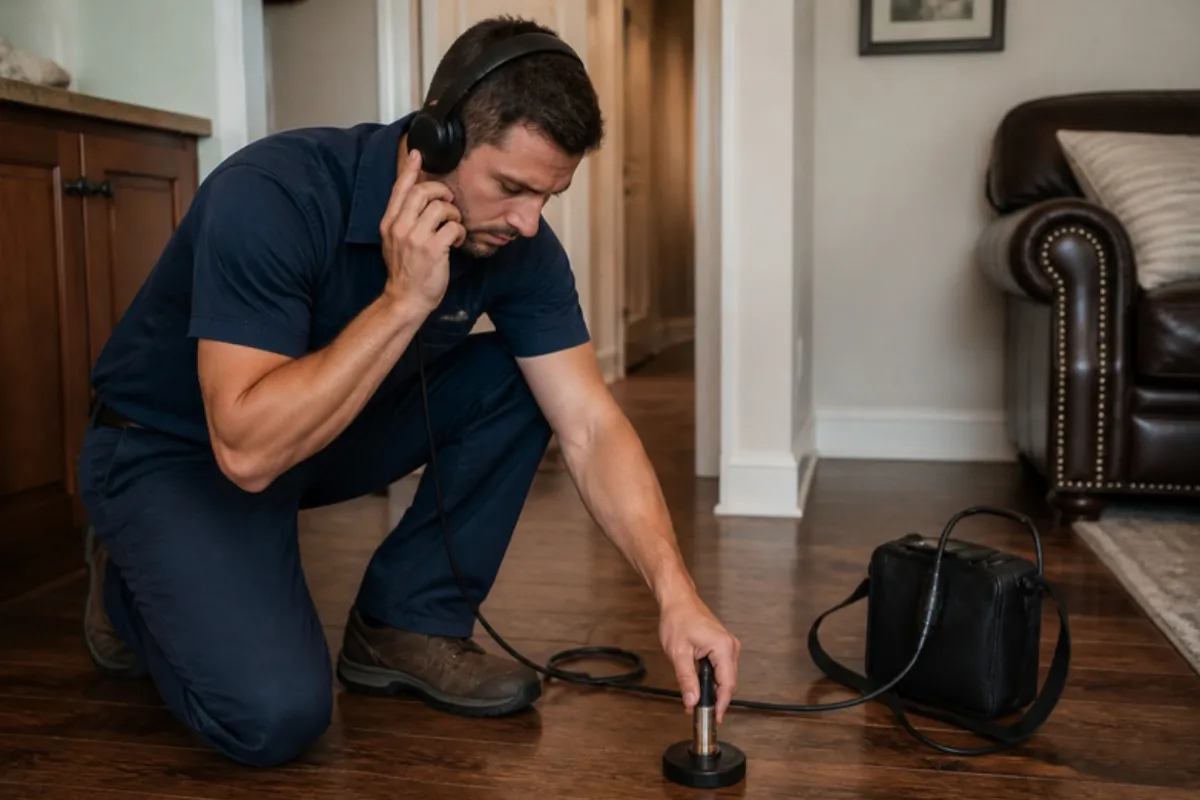
A hidden leak in Longmont usually shows up as higher usage from City of Longmont Water Utilities, a meter that moves with the house quiet, or moisture that has no obvious source. A plumber can confirm the loss and isolate it to one part of the system before opening anything. Call the number on this page to be connected with a local plumber in Longmont.
How do I know the leak is real and not just summer watering?
Start with the meter. Turn off every faucet, the washer, the dishwasher and the sprinkler controller, then watch the meter for a few minutes or take a reading an hour apart. If it moves, water is leaving the plumbing. Comparing gallons, not dollars, on recent bills also helps, because irrigation season can make usage jump for reasons that have nothing to do with a leak.
If the meter is still, look at toilets next. A flapper that does not seal can let water slip into the bowl all day and night, and it is one of the most common sources of unexplained use in any city.
Are leaks more likely in older Longmont houses?
They can be. Longmont's median home was built in 1991, and about 37% of homes predate 1980, many of them in the older neighborhoods around downtown. In those houses, slow seeps tend to start at original valves, older fittings and water heater connections. Newer homes in Prospect New Town and the subdivisions on the city's edges more often leak at push fittings, supply hoses and irrigation parts.
The city's service line inventory classified every water service line in Longmont as non-lead. That is reassuring for the line coming in from the street, but it does not tell you anything about the pipes inside your walls.
What does the city handle, and what is mine?
Longmont maintains its water and sewer mains, and the property owner owns and maintains the sewer service line from the house to the main. The city's pages do not spell out where its side of the water service line ends, so if water is coming up near the meter or in the street, call Water Utilities at (303) 651-8416 during business hours; after hours, the city directs callers to Longmont Public Safety Dispatch. A leak inside the house or along the yard line toward the foundation is normally a private repair.
A local note on permits and water
City of Longmont Building Services requires a permit for any change to plumbing systems, so a repair that reroutes or replaces pipe will likely need one. Longmont's water is soft, about 1 to 2 grains per gallon according to the city, so scale is a smaller factor in leaks here than in harder-water cities. Freeze damage and aging fittings are the bigger concerns.
Leak Detection questions in Longmont
How do I use my water meter to check for a leak?
Does a jump in my water bill always mean a leak?
Do I need a permit to repair the leak once it is found?
Can a winter freeze cause a leak I don't notice until spring?
More plumbing services in Longmont
Leak Detection nearby
Helpful guides
Sources
Last updated: