Leak detection uses meter tests, pressure tests, acoustic listening equipment and thermal imaging to find water escaping from pipes inside walls, under floors or in the service line in the yard, before anything is torn open. Finding the exact spot keeps repair costs and damage down. Call the number on this page to be connected with a local plumber in Denver.
Signs something is leaking
- A water bill that jumps without a change in use
- The meter dial or leak indicator moving with every fixture off
- Damp drywall, stained ceilings or warped flooring
- The sound of running water when nothing is on
- A soft, wet or unusually green strip in the yard
- A musty odor or mold in one area
A quick check you can do
Turn off every faucet, appliance and the irrigation system, then look at the meter. If the leak indicator keeps turning, water is going somewhere. A toilet with a worn flapper is the most common culprit, so check those before assuming the worst. A few drops of food coloring in the tank that show up in the bowl without flushing confirm it.
Tools a plumber uses
| Method | What it does |
|---|---|
| Meter and isolation tests | Shut valves one at a time to narrow the leak to a section of piping |
| Pressure testing | Shows whether a line holds pressure or is losing water |
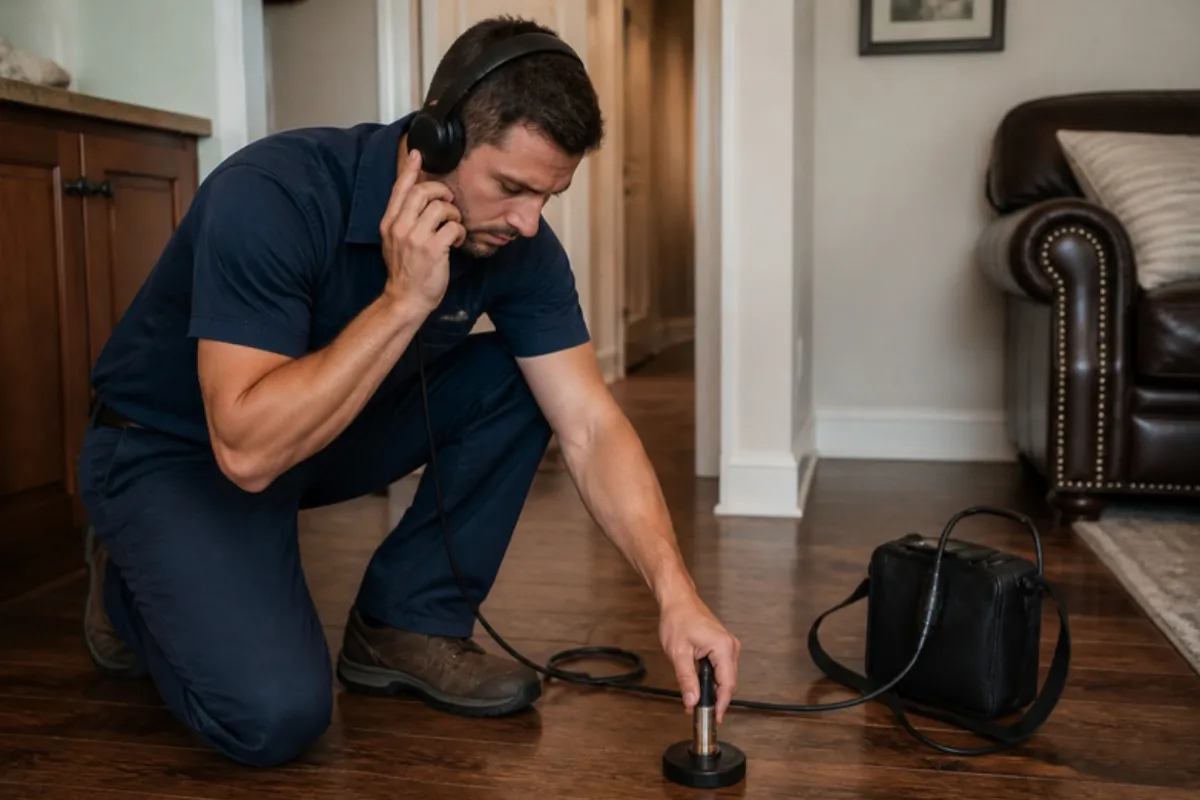
| Acoustic listening | Picks up the sound of water escaping a pipe under a floor or in the ground |
| Thermal imaging | Shows temperature differences from hot water leaks or wet areas behind surfaces |
| Moisture meters | Map how far water has spread in drywall or flooring |
The service line is the owner's
Denver Water says the property owner owns the water service line from the main in the street into the house. A leak anywhere along that line is usually the owner's to fix, which is why it is typically a plumber job. If a line turns out to be lead, Denver Water's Lead Reduction Program replaces lead service lines with copper at no direct cost to the owner. If water is gushing from the ground or near the meter and you cannot stop it, call Denver Water's emergency line at 303-628-6801.
Why older homes see more leaks
About 55.5% of Denver homes were built before 1980, with a median year built of 1975. Galvanized supply pipe can come up in homes from that era and tends to corrode from the inside. Fast temperature swings and hard freezes along the Front Range also stress exposed or poorly insulated pipe in exterior walls and crawl spaces.
What affects the cost
Price depends on how many tools are needed, how much piping has to be ruled out, access to walls and floors, and whether the leak is inside or in the yard. The repair itself is usually priced separately once the leak is found.
Leak Detection questions from Denver homeowners
How do I know if I have a leak in my Denver home?
Who fixes a leak in the water line between the street and my house?
Can a leak be found without opening walls?
What should I do if water is coming up from the ground near my meter?
Related plumbing services in Denver
Leak Detection in nearby cities and towns
Arapahoe County
Jefferson County
Adams County
Douglas County
Broomfield County
Boulder County
Weld County
Elbert County
Park County
Gilpin County
Clear Creek County
Sources
Last updated: